Sustainable Manufacturing
Crafting Tomorrow: How Makers Are Reshaping Production for a Greener Future
In the quest for sustainability, a new breed of manufacturers is emerging. These innovative makers are transforming production processes, aligning them with circular economy principles. But who are these trailblazers, and how are they revolutionising manufacturing to create a more sustainable world?
Understanding the Sustainable Maker
A sustainable maker is a manufacturer or producer who embraces circular economy principles in their production processes. These individuals and companies go beyond traditional manufacturing, focusing on sustainable production methods that minimise waste, conserve resources, and extend product lifecycles.
Why Sustainable Makers Matter
Resource Efficiency: Sustainable makers optimise resource use, reducing waste and conserving valuable materials.
Innovation in Production: They drive innovation in manufacturing processes, developing new techniques that align with circular principles.
Waste Reduction: By designing for disassembly and recyclability, sustainable makers significantly reduce industrial waste.
Extended Product Lifecycles: Their products are often designed for durability, repair, and eventual recycling or upcycling.
Economic Opportunities: Sustainable making creates new business models and job opportunities in repair, refurbishment, and recycling sectors.
The Impact Across Industries
Sustainable makers are transforming various sectors:
Electronics: Producing modular devices designed for easy repair and component upgrades.
Furniture: Creating pieces from recycled materials or designing for easy disassembly and material recovery.
Textiles: Developing closed-loop production systems for fabrics, minimising water use and chemical pollution.
The Future of Sustainable Making
As we move towards a more sustainable future, these innovative makers will play an increasingly crucial role. The future of manufacturing lies in closed-loop systems, where waste is minimised, and materials are continuously cycled back into production.
Advancements in technology, such as 3D printing and AI-optimised production processes, are opening new possibilities for sustainable making. These innovations allow for more localised, on-demand production, reducing overproduction and transportation emissions.
Call to Action
Are you a manufacturer or producer looking to embrace sustainable principles? Start by assessing your current production processes and identifying areas for improvement. Join the NU Design Spaces community to connect with sustainable design experts, access resources on eco-friendly manufacturing, and share your journey towards greener production. Together, we can transform the manufacturing landscape and build a more sustainable future.

Hufft is a design and fabrication studio founded in Kansas City, Missouri. The company was established with the mission to create meaningful spaces and objects through an authentic approach inspired by people and places. Hufft's current mission focuses on integrating designers and builders to deliver innovative and sustainable solutions for architecture, interiors, and objects. Core values include creativity, sustainability, and craftsmanship, with a purpose to push the boundaries of design and fabrication.
Location
Headquarters: Kansas City, Missouri, USA.
Primary manufacturing/operations locations: Kansas City, Missouri and Bentonville, Arkansas.
Note: Strategic locations in the Midwest to optimize local sourcing, distribution, and collaboration with industry partners.
The Circular Vision
Core circular economy principles: While not explicitly stated, Hufft's projects often incorporate sustainable design strategies and materials.
Key innovations: Integration of design and fabrication processes, allowing for custom solutions and efficient use of materials.
Prioritization of local sourcing and closed-loop supply chains: Emphasis on using local materials and production methods to minimize environmental impact and support local economies.
Pioneering Solutions
Flagship products: Custom architectural projects, interior designs, and fabricated objects.
Unique value propositions: High-quality, bespoke design solutions that prioritize creativity, functionality, and sustainability. Hufft's products are known for their innovative design, attention to detail, and integration of fabrication expertise.
The Regenerative Future
R&D focus areas: Advancing sustainable design practices, optimizing fabrication processes, and developing new applications for materials in architecture and object design.
Ambitious goals: To lead the design and fabrication industry in innovative practices, create unique and sustainable spaces and objects, and inspire a shift towards more integrated design and production approaches.
Fact Sheet
Commercial Availability: Services available through direct engagement with clients for custom projects.
Circularity Rating: 3/5 (Some focus on sustainable practices, but not explicitly centered on circular economy principles).
Key Certifications: Information not available.
Cost Rating: 4/5 (Custom solutions with a focus on quality and innovation).
Material Passport: Detailed material information likely available for custom projects, but not standardized across all work.
Designed for Disassembly: Information not available, likely project-dependent.
Carbon Performance: While not explicitly stated, sustainable design strategies are often incorporated into projects.
Key Takeaway
Hufft transforms the design and fabrication industry through innovative, integrated solutions, setting a benchmark for creativity and craftsmanship in modern architecture and object design.
Explore Further
Hufft website: https://www.hufft.com
Project overview: https://www.hufft.com/work/
Example project: Baldwin Pop-up

Iris van Herpen is a Dutch fashion designer known for her innovative fusion of technology and traditional haute couture craftsmanship. She founded her eponymous label in 2007 and has since become a prominent figure in the fashion industry, recognized for her pioneering use of 3D printing and other advanced technologies. Van Herpen's current mission focuses on integrating sustainability and circular economy principles into her designs, creating garments that are both avant-garde and environmentally responsible. Core values include innovation, sustainability, and interdisciplinary collaboration, with a purpose to redefine the relationship between fashion, technology, and the environment.
Location
Headquarters: Amsterdam, Netherlands.
Primary manufacturing/operations locations: Various global locations for projects and collaborations.
The Circular Vision
Core circular economy principles: Designing out waste, using recycled and sustainable materials, and creating garments that promote environmental awareness and sustainable practices.
Key innovations: Development of collections like "Earthrise," which uses recycled ocean plastics, and collaborations with Parley for the Oceans to create sustainable fabrics. Van Herpen's work often incorporates advanced technologies such as 3D printing and laser cutting to minimize material waste.
Prioritization of local sourcing and closed-loop supply chains: Emphasis on using sustainable production methods and materials sourced from environmentally responsible partners.
Pioneering Solutions
Flagship projects: Van Herpen's portfolio includes innovative projects such as the "Earthrise" collection (using recycled ocean plastics), the "Magnum Vegan Dress" (made from upcycled and plant-based materials), the "Lucid" collection (exploring the concept of lucid dreaming with 3D-printed elements), and the "Holobiont" dress (created in collaboration with Parley for the Oceans using upcycled marine debris).
The Regenerative Future
R&D focus areas: Advancing sustainable fashion techniques, exploring new applications for recycled and bio-based materials, and developing solutions that further reduce waste and energy consumption in fashion production processes.
Ambitious goals: To lead the fashion industry in sustainable practices, create zero-waste collections, and inspire a shift towards a regenerative approach to fashion design and consumption.
Fact Sheet
Commercial Availability: Fashion collections and design services available through collaborations, exhibitions, and partnerships with brands and institutions.
Circularity Rating: 5/5 (Strong focus on integrating circular economy principles and waste reduction in fashion design).
Key Certifications: ANDAM Grand Prix Award (2014), STARTS Prize by the European Commission (2016), Johannes Vermeer Award (2017).
Cost Rating: High-end luxury pricing, with significant value in sustainability and innovation.
Material Passport: Detailed material traceability and use of recycled and sustainable materials in many projects.
Designed for Disassembly: Yes, many garments are designed with consideration for future recyclability and material reuse.
Carbon Performance: Focus on reducing carbon footprint through the use of sustainable materials and local production. Committed to minimizing environmental impact through efficient design and manufacturing processes.
Key Takeaway
Iris van Herpen transforms the fashion industry through innovative, sustainable solutions that prioritize circular economy principles, setting a benchmark for environmental responsibility and material innovation in contemporary haute couture.
Explore Further
Iris van Herpen website: https://www.irisvanherpen.com
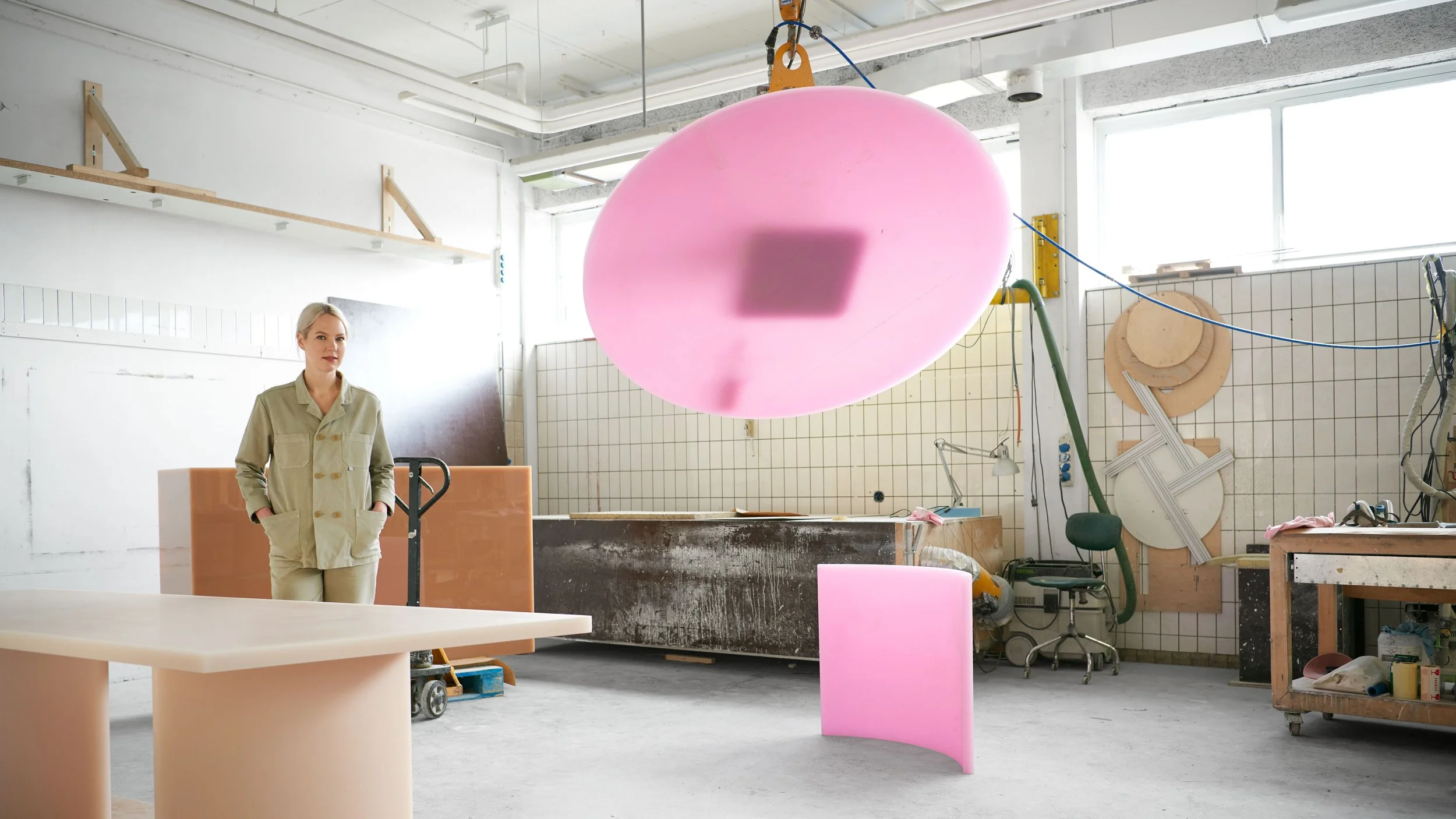
S.T.R.S. Studio is a renowned creative production studio based in Rotterdam, Netherlands. The company was established with the mission to create custom-made objects for artists and designers, specializing in hand-cast resin production. S.T.R.S. Studio's current mission focuses on combining meticulous craftsmanship with innovative material exploration to produce unique, high-quality objects. Core values include sustainability, innovation, and collaboration, with a purpose to push the boundaries of material use and production techniques.
Location
Headquarters: Rotterdam, Netherlands.
Primary manufacturing/operations locations: Rotterdam, Netherlands.
Note: Strategic location in Rotterdam to leverage local expertise in design and production processes.
The Circular Vision
Core circular economy principles: Designing out waste, using sustainable and innovative materials, and creating products that are fully recyclable.
Key innovations: Expertise in hand-cast resin production, allowing for the creation of unique and intricate objects. The studio continuously experiments with both existing and new materials to elevate the quality and aesthetic of their custom-made objects.
Prioritization of local sourcing and closed-loop supply chains: Emphasis on using locally sourced materials and sustainable production methods to minimize environmental impact and support local economies.
Pioneering Solutions
Flagship products: Custom-made objects for artists and designers, including one-off pieces, large editions, small objects, and major installations.
Unique value propositions: High-quality, sustainable production solutions that prioritize circularity, material reuse, and environmental responsibility. S.T.R.S. Studio's products are known for their intricate details, innovative design, and ability to capture the artistic vision of their clients.
The Regenerative Future
R&D focus areas: Advancing material exploration and experimentation, optimizing production processes, and developing new applications for hand-cast resin and other materials.
Ambitious goals: To lead the creative production industry in sustainable practices, create zero-waste products, and inspire a shift towards a regenerative approach to material design.
Fact Sheet
Commercial Availability: Products available globally through direct collaborations with artists, designers, and galleries.
Environmental Product Declaration (EPD): Information not available.
Circularity Rating: 5/5 (Strong focus on circular economy principles).
Key Certifications: Information not available.
Cost Rating: 4/5 (Competitive with conventional alternatives, with significant cost savings in sustainable materials).
Material Passport: Detailed material traceability and use of sustainable and innovative materials.
Designed for Disassembly: Yes, products are designed for easy disassembly and recycling.
Carbon Performance: Focus on reducing carbon footprint through sustainable materials and local production. Committed to using the highest percentage of recycled content without compromising on quality and safety.
Key Takeaway
S.T.R.S. Studio transforms the creative production industry through innovative, sustainable solutions, setting a benchmark for circularity and environmental responsibility in modern design and craftsmanship.
Explore Further
S.T.R.S. Studio website: https://www.strs.nl
Overview: https://www.strs.nl/About
Lucas Muñoz is a Spanish designer, artist, and craft traveler based between the Netherlands and Spain. He established his studio with the mission to explore the functionality and conceptual meaning of objects, often using upcycled and locally sourced materials. Muñoz's current mission focuses on integrating circular economy principles into his design practice, promoting sustainability and innovative material use. Core values include sustainability, innovation, and craftsmanship, with a purpose to redefine the relationship between design, materials, and the environment.
Location
Headquarters: Based between the Netherlands and Spain.
Primary manufacturing/operations locations: Various locations based on project requirements and collaborations.
The Circular Vision
Core circular economy principles: Designing out waste, using recycled and locally sourced materials, and creating products that promote environmental awareness and sustainable practices.
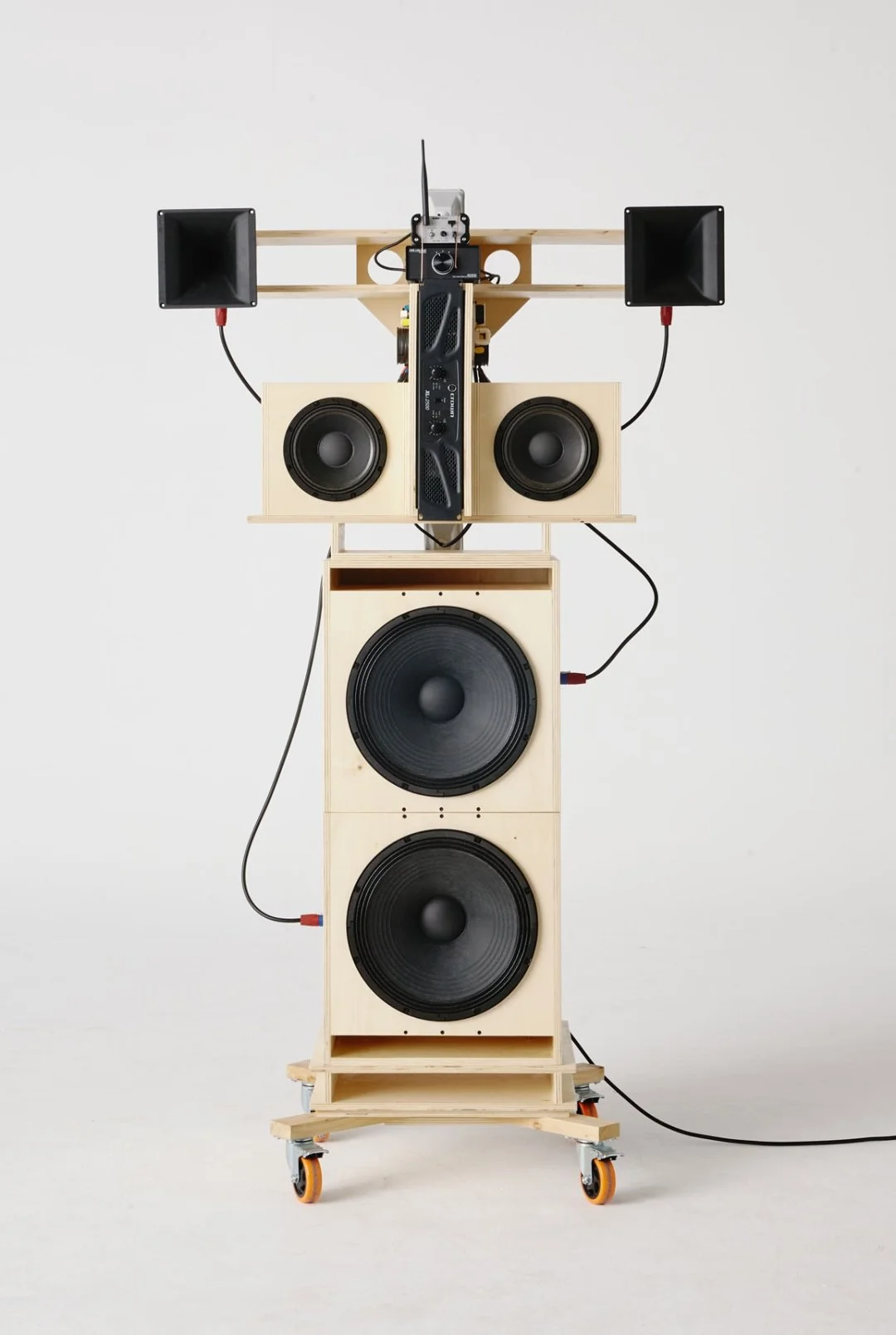
Key innovations: Development of projects like the "Sound System" built from upcycled shoe materials, "TARA Stools" made from random rocks on metallic tripods, and "OFIS" series exploring the domestic function of construction materials.
Prioritization of local sourcing and closed-loop supply chains: Strong emphasis on using locally sourced waste materials and sustainable production methods to minimize environmental impact and support local economies.
Pioneering Solutions
Flagship projects: Lucas Muñoz's portfolio includes innovative projects such as the Sound System for ON Running (built from upcycled shoe materials), TARA Stools (using random rocks on metallic tripods), OFIS series (exploring the domestic function of construction materials), and the Transitorial pavilion (constructed from 'to be stored' elements for Jerusalem Design Week).
The Regenerative Future
R&D focus areas: Advancing sustainable design techniques, exploring new applications for recycled and upcycled materials, and developing solutions that further reduce waste and energy consumption in design and production processes.
Ambitious goals: To lead the design industry in sustainable practices, create zero-waste products, and inspire a shift towards a regenerative approach to design and material usage.
Fact Sheet
Commercial Availability: Design services and products available through collaborations, exhibitions, and partnerships with brands and institutions.
Circularity Rating: 5/5 (Strong focus on integrating circular economy principles and waste reduction in design).
Material Passport: Detailed material traceability and use of recycled and locally sourced materials in projects.
Designed for Disassembly: Yes, many products are designed with consideration for future adaptability and material reuse.
Carbon Performance: Focus on reducing carbon footprint through the use of waste materials and local production. Committed to minimizing environmental impact through efficient design and manufacturing processes.
Key Takeaway
Lucas Muñoz transforms the design industry through innovative, sustainable solutions that prioritize circular economy principles, setting a benchmark for environmental responsibility and material innovation in contemporary design.
Explore Further
Lucas Muñoz website: https://www.lucasmunoz.com

James Shaw is a British designer and maker based in London, UK. He established his studio with the mission to explore innovative and sustainable design solutions through experimental approaches to materials, particularly waste plastics. Shaw's current mission focuses on challenging notions of waste and creating beautiful, functional objects from recycled materials. Core values include sustainability, innovation, and craftsmanship, with a purpose to redefine the relationship between design, materials, and the environment.
Location
Headquarters: London, United Kingdom.
Primary manufacturing/operations locations: Studio in London, with various collaborations and exhibitions globally.
The Circular Vision
Core circular economy principles: Designing out waste, using recycled materials, and creating products that promote environmental awareness and sustainable practices.
Key innovations: Development of the "Plastic Baroque" series, which transforms waste plastics into decorative and functional objects using custom-built extrusion guns.
Prioritization of local sourcing and closed-loop supply chains: Emphasis on using locally sourced waste materials and sustainable production methods to minimize environmental impact and support local economies.
Pioneering Solutions
Flagship projects: Shaw's portfolio includes innovative projects such as the "Plastic Baroque" series (furniture and objects made from extruded waste plastic), "Wood Metal Plastic" series (combining traditional materials with recycled plastic), and various experimental furniture and object designs that challenge conventional manufacturing processes.
The Regenerative Future
R&D focus areas: Advancing sustainable design techniques, exploring new applications for waste plastics and other recycled materials, and developing solutions that further reduce waste and energy consumption in design and production processes.
Ambitious goals: To lead the design industry in sustainable practices, create zero-waste products, and inspire a shift towards a regenerative approach to design and material usage.
Fact Sheet
Commercial Availability: Design services and products available through collaborations, exhibitions, and direct sales from his website.
Circularity Rating: 5/5 (Strong focus on integrating circular economy principles and waste reduction in design).
Key Certifications: Nominated for the Design Museum Designs of the Year Award, winner of the Arc Chair Design Award.
Cost Rating: 4/5 (High-end design pieces with significant value in sustainability and innovation).
Material Passport: Detailed material traceability and use of recycled and waste materials in projects.
Designed for Disassembly: Information not explicitly provided, but emphasis on material exploration suggests potential for adaptability and reuse.
Carbon Performance: Focus on reducing carbon footprint through the use of waste materials and local production. Committed to minimizing environmental impact through efficient design and manufacturing processes.
Key Takeaway
James Shaw transforms the design industry through innovative, sustainable solutions that prioritize circular economy principles, setting a benchmark for environmental responsibility and material innovation in contemporary design.
Explore Further
James Shaw website: https://jamesmichaelshaw.co.uk

WikiHouse is an open-source, modular building system developed by Open Systems Lab. The project was initiated in 2011 by a team at Architecture 00, led by Alastair Parvin and Nick Ierodiaconou, in collaboration with Momentum Engineering and Espians. WikiHouse's mission is to democratize the construction process by making it easy for anyone to design, manufacture, and assemble high-performance buildings. Core values include sustainability, innovation, and accessibility, with a purpose to transform the construction industry through digital fabrication and open-source principles.
Location
Headquarters: London, United Kingdom.
Primary manufacturing/operations locations: Distributed network of small, local businesses using CNC machines.
Note: Strategic global presence to optimize local sourcing, distribution, and collaboration with industry partners.
The Circular Vision
Core circular economy principles: Designing out waste, using sustainable and bio-based materials, and creating products that are fully recyclable.
Key innovations: Development of WikiHouse blocks, which are digitally fabricated using CNC machines from plywood or OSB3. The system allows for rapid, precise assembly with minimal waste and environmental impact.
Prioritization of local sourcing and closed-loop supply chains: Emphasis on using locally sourced materials and distributed manufacturing to minimize environmental impact and support local economies.
Pioneering Solutions
Flagship products: WikiHouse Skylark system, which includes modular blocks for walls, floors, and roofs.
Unique value propositions: High-quality, sustainable building solutions that prioritize circularity, material reuse, and environmental responsibility. WikiHouse buildings are known for their precision, ease of assembly, and ability to be constructed by individuals without traditional construction skills.
The Regenerative Future
R&D focus areas: Advancing digital fabrication technologies, optimizing production processes, and developing new applications for modular building systems.
Ambitious goals: To lead the construction industry in sustainable practices, create zero-waste products, and inspire a shift towards a regenerative built environment.
Fact Sheet
Commercial Availability: Products available globally through direct sales and partnerships with local manufacturers.
Environmental Product Declaration (EPD): Information not available.
Circularity Rating: 5/5 (Strong focus on circular economy principles).
Key Certifications: Information not available.
Cost Rating: 4/5 (Competitive with conventional alternatives, with significant cost savings in sustainable materials).
Material Passport: Detailed material traceability and use of sustainable and bio-based materials.
Designed for Disassembly: Yes, products are designed for easy disassembly and recycling.
Carbon Performance: Focus on reducing carbon footprint through sustainable materials and local production. WikiHouse structures are carbon negative due to the use of responsibly-grown wood.
Key Takeaway
WikiHouse transforms the construction industry through innovative, sustainable modular building systems, setting a benchmark for circularity and environmental responsibility.
Explore Further
WikiHouse website: https://www.wikihouse.cc
Sustainability overview: https://www.wikihouse.cc/mission
Example product: WikiHouse Skylark system - https://www.wikihouse.cc/product